
-
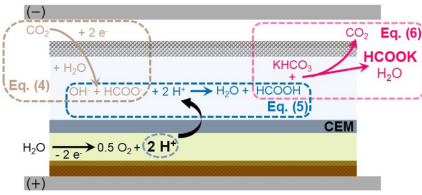
“CO2 -mediated bicarbonate conversion to concentrated formate in a CEM based electrolyzer”, Journal of Energy Chemistry
Renewable energy-driven bicarbonate conversion to valuable chemicals presents an attractive strategy for mitigating CO2 emissions, as bicarbonate can be efficiently generated from the capture of atmospheric CO2 using alkaline solutions wit...
-

"Ecological migration and cultural preservation: A comparative study of the Tuvan and Evenki indigenous groups in China", International Conference on Renewable Energy and Ecosystem
Ecological migration driven by climate change, resource depletion, and environmental degradation has become a pressing global issue, posing severe challenges to the cultural traditions and identities of indigenous communities. This research focuses on the displacement of local residents due to the establishment of protected areas, using two indigenous groups in China—the Tuvan and the Evenki—as case studies. Through comparative analysis, it explores the impact of protected area development on their ecological migration and cultural heritage.
-

A New Way of Thinking: “the (Mis-)mapping of Shamanism on to Religion and Spirituality”, John Locke Photo Essay Contest
From the missionaries in foreign lands to cathedrals preserving sacred texts, the relationship between the mundane and the sublime has taken various forms throughout human history.
-
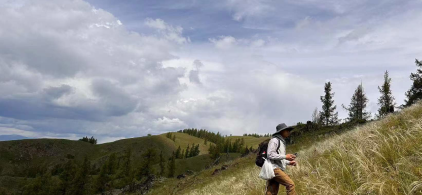
“The Carbon Conundrum of Concrete: A Global Construction Crisis”, Harvard International Review
The consumption of concrete has skyrocketed in recent decades. Today, an estimated 30 billion tons of concrete is consumed worldwide annually. Such a staggering consumption of concrete makes it at once one of the greatest contributors (even before plastic production) of global CO2 emissions, a
-
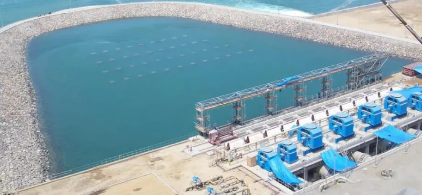
“Desalination in the Middle East”, Harvard International Review
The number of seawater desalination plants have grown rapidly in the last decades. At present, there are an estimated 16,000 desalination plants globally. These discharge 142 million cubic meters of hypersaline brine daily, or 51.8 billion cubic meters of brine annually. Brine disposal has been a known issue for decades.


Copyright © 2024 All Rights Reserved